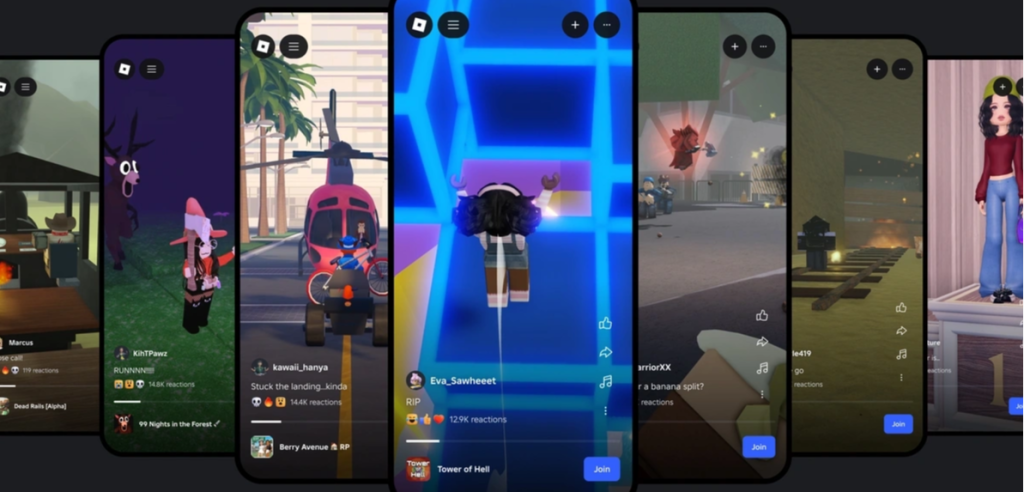

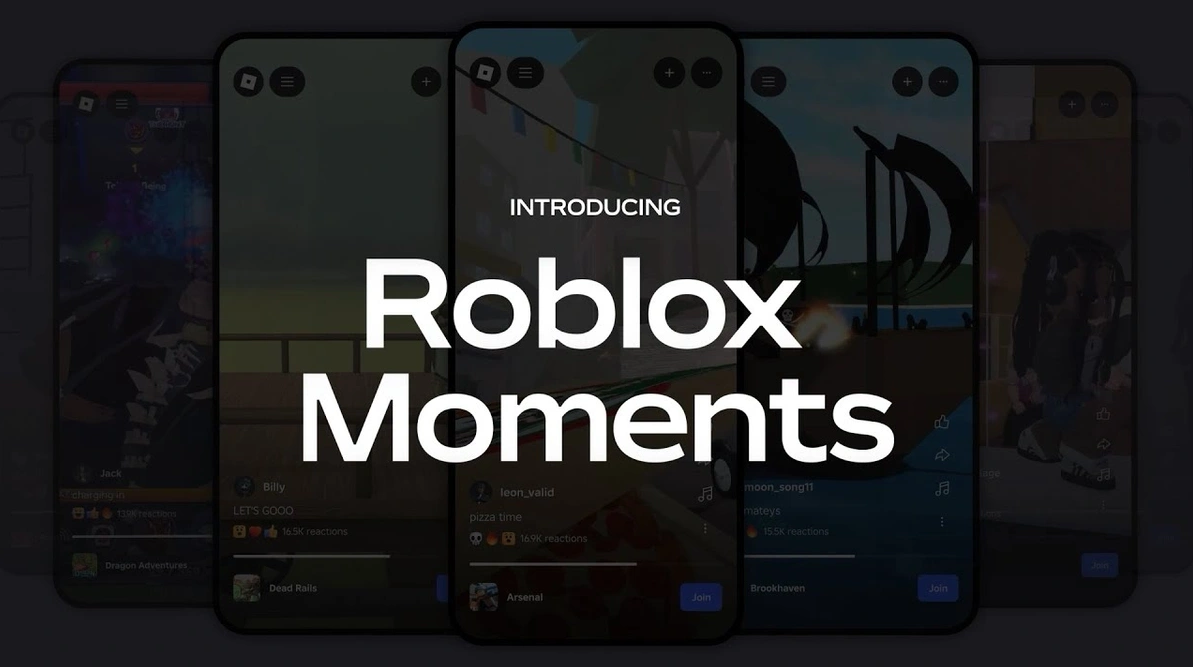
At a recent conference of Roblox developers, the company announced that it would launch a TikTok short video feature entitled “Roblox Moments” for the sharing of game clips. Also published are the plans for the promotion of creators’ earnings, multiple AI creative tools and other performance optimizations.
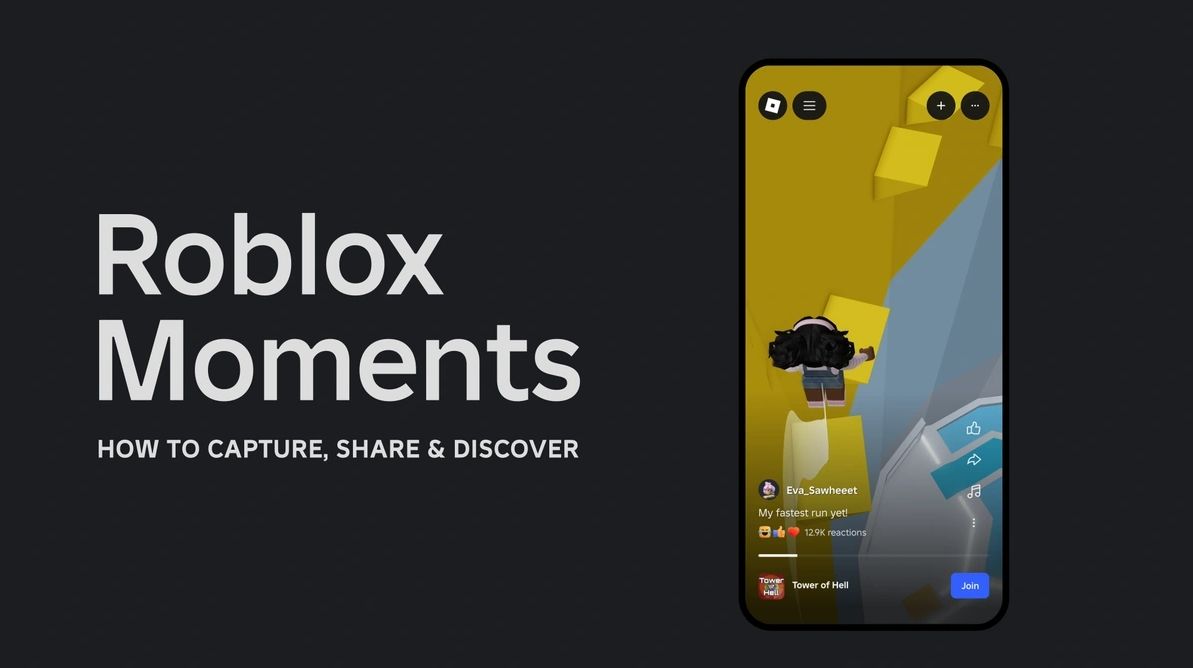
The “Moments” feature, which is currently in the testing stage, is open to users aged 13 and above, supporting the user to record up to 30 seconds of video games and to edit, add background music and then share it in a vertically rolling stream of information. Users can browse through a community-shared game for a good moment, interact with emoticons, and can jump directly from video to relevant experience.
Later this year, Roblox plans to open the API-based functionality to allow creators to build a custom-defined creation and discovery system in games. For example, creators will be able to display hot spots and high moments of their own games and to create a list of topics such as “Most-Down Cars” in scenarios such as racing speed games.
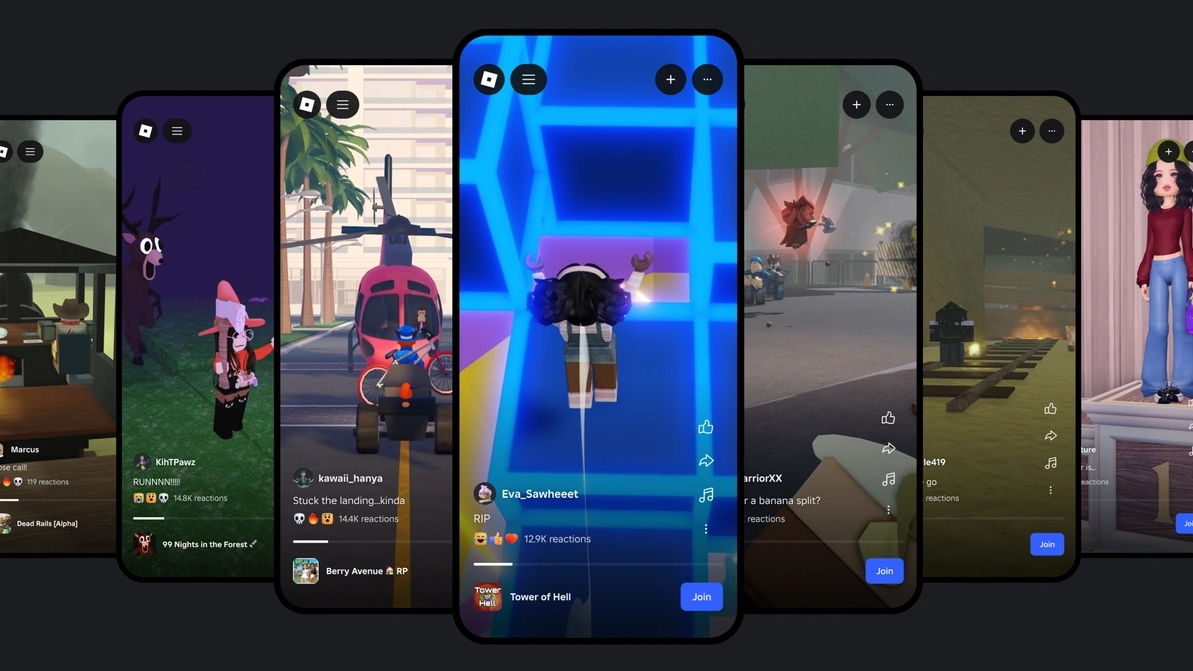
Roblox video clips and other magic short videos are frequently viralized on vertical video platforms such as TikTok and Reels, but there is still a need to compete with dance videos, political commentary and AI to generate content. Roblox’s intention is to keep the user on its own platform. – According to YouTube data quoted in its press release, Roblox-related content has received “more than 1 trillion video views” on the platform, from which the company apparently wishes to share.
However, such new social functions may raise regulatory concerns. Last month, Roblox faced a number of lawsuits and was under pressure from public opinion over the lack of child safety. The “Moments” feature is currently restricted to users over 13 years of age and has a high-level flow pattern similar to TikTok.
In addition to the short video function, Roblox has published multiple AI tools: creators can generate interactive vehicles, weapons, etc. through text alerts, whose role can be used directly in the virtual world for these AI-generated functional objects, which is a major upgrade compared to the static 3D model; real-time AI voice-translation tools support easy socialization for users in English, Spanish, French and German; and text-to-speak and voice-to-speak API, which can add AI voice description and dialogue to game roles (initially provided with at least 10 audio presets), which allows users to control game roles through voice commands.