
In the summer of 2025, the short play market appeared to have been “hit” precisely by an unexpected bullet.
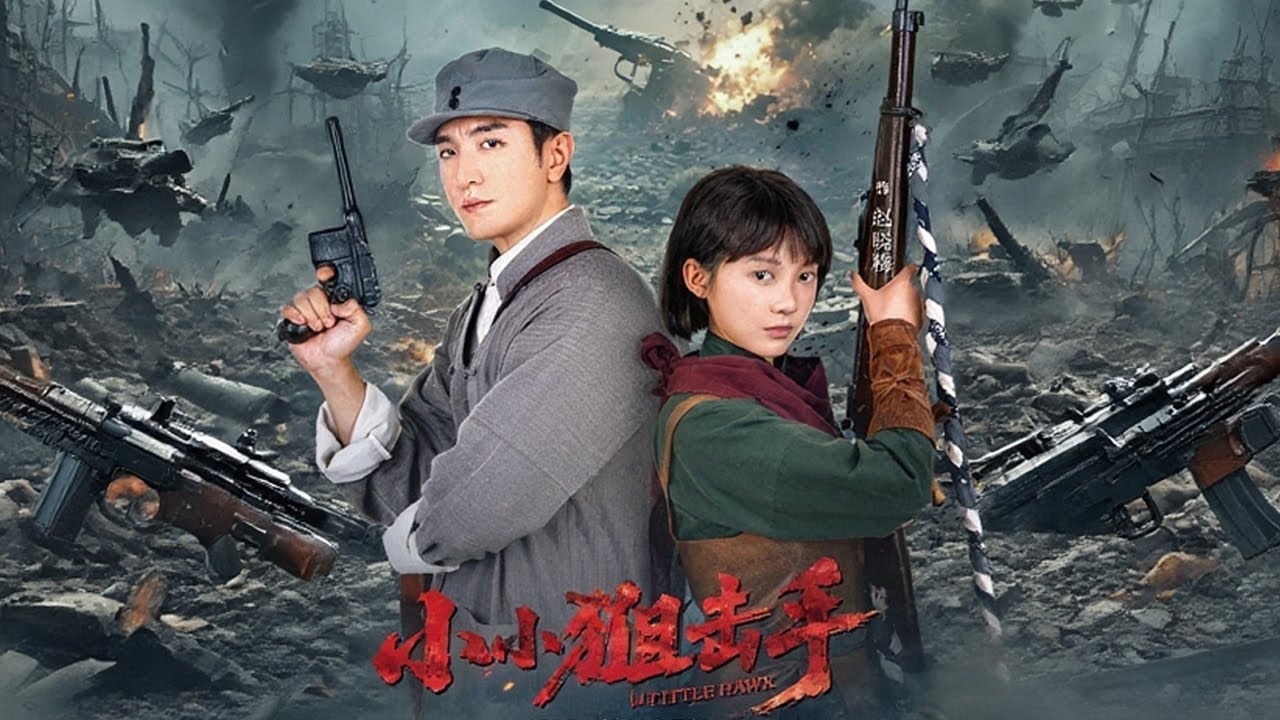
An anti-war piece called Little Sniper made the whole industry hear the echo – a week on the line, with 200 million hits and the highest number of anti-war pieces on the red fruit short play platform.
However, how can this “gunfire”, which is somewhat “aberrant” — a well-articulated and seriously expressed typologies of war, The Little Sniper, make it possible for young audiences to flaunt God willingly?
The answer, perhaps, is hidden in its recasting of “war” — it does not follow the grand narrative of traditional war films, but rather chooses a delicate profile: to point the lens towards a specific person in a war, a specific soul.
It is both a reflection of the victory of 80 years ago, and more like a whisper from time to time: How can we meet that bitter history?
When we pull the data out of the clouds, we find that Little Sniper’s foreign forces surged, not just a short play success. Behind it is a precise “show” backed by the Red Fruit Shorts “Flammation Plan”, which both calibrates a new target for the second half of the shorts and sends a “signer” to the industry.
It’s perfect for short play!
Breaking the barriers and repeating war from a female perspective
In the past, the subject of war was raised, and in our minds it was often the hard man, the smoke, and the strong male face. This seems to be an agreed creative template.
The first thing that Little Sniper did was to break those paradigms and redraw a different war picture with a more ingenious pen touch. The centre of the scroll is not a natural hero, but rather a hunter girl named Zhao Xiaomei.
At the beginning of the story, she was just a “fake boy”, naive, pure, even reckless, living in a mountain forest. The only belief that supported her life when the disaster of the village of Koshu fell upon her loved ones, was the original and hot four words — “blood for blood”. At this stage, she is more like an injured young animal, whose eyes are filled with flames of hatred than with the belief to defend her country.
This is almost “anti-hero”. Instead of rushing to embellish the protagonists with shining nails, it openly presented to the audience the real reaction of an ordinary man to trauma — the danger of complacency, confusion and even hatred.
That is why her growth was particularly dramatic — a few of the key shifts in the play, both as a “cooling point” and as a growth arc of a role that completes a mental transition.
For the first time, it was “genius girls hit their faces with strength”. When she joined the guerrillas with a desire for revenge, Captain Liang Tian (Golden Monument) did not immediately put her on the battlefield, which filled her with confusion and anxiety. Until the death of a Japanese army ambush, the team was suppressed by enemy snipers and endangered. It is at this moment that Zhao Xiaomei’s birthright hunter’s gift has been rekindled.
She took a gun and turned the war upside down with familiarity with the forest and extraordinary calm. After the shooting, she reaped not only the recognition of her comrades, but also an unprecedented experience: the weapons in her hands, for the first time, were not just revenge. And at that moment the speech of vengeance was crushed for the first time by a collective cry.
For the second time, it was even more alarming — “Fake-to-kill” — that was her shift from prey to hunter. Zhao Xiaomei showed wisdom and courage beyond his age when escorting film documenting war crimes against a strong enemy. Using the natural environment, she designed a play of “false death”, tricked the enemy and completed a deadly counterkill at the most relaxed moment.
This scenario marks her growing from a mere talent-dependent “soldier” to a “soldier” who knows how to use tactics and psychology. In her eyes, the flames of hatred faded, and were replaced by the calm and perseverance that warriors had. It was only at that moment that she really understood the captain’s words and learned how to control the gun rather than being controlled by it.
Looking at war with the eyes of a girl is in itself a brave look at the risk. Instead of avoiding the cruelty of war, it has made it even more painful because of this delicate, personal evolution — war is no longer the number on the map of arrows and reports of casualties, but rather the tears of a young girl who has lost her home, and the fear of death every time.
As a result, Little Sniper has been introduced from a female perspective, much more than providing an innovative narrative sample. It breaks the long-standing “male-dominated” situation in the subject of war and injects unique emotional temperatures into the story.
This nuanced emotional depiction has undoubtedly built an emotional bridge to the history of the young generation, especially the female audience, so that they can “deeply” touch the fabric of war and understand the weight of peace.
Under the burning soil, a flower of humanity.
If the female perspective is the attractive shell of Little Sniper, the ingrained excavation of the depth of humanity is the soul that the play can retain — the search for more complex humanities — and the refusal to simplify the story into a revenge speech of “an escalation of ecstasy”.
It dared to cultivate a flower about the complexity of humanity on the burning soil of hatred. The flower was first planted in the “Teacher” relationship between Liang Tian and Xiaomei Jo.
It’s more like a sharpener stone than a mentor. He saw the fire of hatred in the girl’s heart, and what he did was not to put it out, but to create it into a fire of fire, a fire that could raze. He taught her how to lift the gun from a specific enemy and target the aggression itself and the future that needs to be protected.
It’s a spiritual “sniper teaching”, calibrated, the ruler of faith.
Guided by Liang, Zhao Xiaomei’s faith coordinates gradually moved from “revenging for Grandpa”, calibrating to “fighting for the protection of more innocent people” and ultimately to “fighting for truth, peace and justice”.
This leap of faith, from personal vendettas to the greatness of the home country, gives the role a true arc of growth. And it is the bold and necessary — “teaching Japanese journalists” — that pushes this humanization to the extreme.
It’s almost a wire-drive — any little inflammation or preaching would make the story a lie, but it was dealt with with with great restraint. The transformation of the Japanese journalist Naoko Ishibashi was not “convinced” but “seed” — she presented a crucial “third-party perspective”.
At first, Naoko Shihashi was just a record-writer for the truth, but her position was shaken when she witnessed the Japanese army ‘ s atrocities.
However, this was not translated into cheap preaching, but was driven by a specific event: She saw the temperature of a bowl of porridge handed over by guerrillas when she was in danger; she saw Zhao Xiaomei on the line of life and death, pounced to cover her shock; and she saw the people of this land, even in hell, with the light in their eyes.
Goodness, at this point, is a language that does not need to be translated.
These shocks ultimately gave Naoko the stone bridge a difficult but right choice — to expose the Japanese army for war crimes. In this instance, the kernel of Little Sniper jumped suddenly from the level of national hatred to reflection on war and civilization.
So, the play is not just “anti-Day” but it’s more about a universal creative mother’s issue: Is justice and goodness still present in war situations? Can they cross borders and camps?
The depth of this reflection makes it possible to raise the strongest moral questions about the criminal acts of fascism, without avoiding hatred.
Upgrade of the steroids, platform advocacy under industry trends
The current short play market, which is no longer just beginning to be “coarse”, is being upgraded.
And when it comes to Little Sniper, it reminds us in a near “luxurious” way that a short play can also have a film sense — a sense that is not stacked by a few slow lenses or filters, but a constant creative attitude.
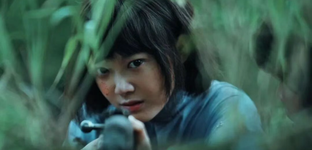
Turning on Little Sniper, the most intuitive feeling is the “film sense” that comes out of the face. Whether Zhao Xiaomei’s aim through the slits of the grass, the focus and killing in her eyes, or the blood and dust on her face in her dark room, the vulnerability and helplessness of tears in her eyes, the image, the light and the colour of the picture are full of narrative.
This sense of quality stems from the “realty” of the production team in every detail — in order to restore the professional attitude of the field snipers, the team did not rely on the actor’s “think of course” but specifically invited the retired Special Forces Section to serve as a firing adviser and as a team mentor. From the most basic gun positions to complex tactical manoeuvres, every detail has been sharpened. This makes the characters in the play “stable” in front of the camera, and “sliding” in the fire, which greatly enhances the sense of truth.
In addition, the lead team of the show was called the “fall-down hit”. The Director-General, Tang Lijun, has created a series of national dramas, such as ” Flowers ” , which have no doubt about the quality of the content; the director, Ja Fong, and the photographer, Wang Wenhua, have a wealth of experience in the production of video films on the subject of war.
They will be able to produce large-scale video-language and face-handling techniques, condensed into short-story inches, so that the scenes of mountain snipers, water puddles, etc., are both exciting and credible.
The hard work outside the lens also shapes the reality in the lens. In order to recreate the harsh conditions of the mountain guerrillas, the theatre was filmed in the wild, with high temperatures and rain and mosquito bites in the summer months. A critical water standoff scene was filmed with even typhoons and heavy rainfall. The actors filmed repeatedly in the cold water and finally finished the play.
This creative “dumb”, which ultimately translates into a high-quality sense of visual language, should be praised by anyone who looks at it.
In fact, this is not an isolated case, but behind it is a long-wire layout of the red fruit short opera “Flammation Plan”. Of course, the fineness of a work may be the insistence of the creative team; but the emergence of a collection of fine content is dependent on platform advocacy and support.
In the light of the general trend towards the qualitativeization of short plays, it is particularly important that the head platform take advantage of its own strength. The “Flammation Plan” launched by the red fruit drama is a positive response to this industry trend. Through the support of funds, traffic and professional teams, the programme provides a more fertile soil for creators who are interested in exploring the depth of content and the quality of their work.
Since December 2024, the Jell-Flammation program has accumulated over 90 fine shorts, and it’s a list of itself, like a map of the development of the shorts. – The hard-core science fiction focused on “The Base of the Moon,” “I’m a Charterhead on the Moon,” the anti-fraud theme from real cases, “The Cloud Catcher,” the Ink Renaissance, which displays the beauty of the restoration of ancient paintings, and even the attempt to recreate the classic IP, “Sinning and Harming the Iron Fist.”
Although they cover a variety of topics, such as science fiction, fraud, ingenuity, entrepreneurship and mobility, the core is very similar: They all try to carry more thoughts, values and aesthetic possibilities than the “short and flat” entertainment properties of the short play.
It can be said that it is such an initiative that makes the emergence of such works as Little Sniper more inevitable from an unexpected surprise and provides a solid road for the emergence of more fine short operas in the future.
The echo of history and industry.
80 years of light enough to obscure a period of history, how can memory not be forgotten, but re-understanded by Z-time audiences? It’s an important subject for video people.
Little Sniper does not speak on the surface, but rather hides the answer in the growth of a girl, in every fight of an accelerated heart rate and in every decision of tears. It proves with its own success that the melody can be very good and that positive energy can be very moving.
In this sense, the fire of Little Sniper may not have been an accident. It was a resonance at the right time, in a more sincere way, with the hot ground that never cooled in the hearts of the present generation of young people.
Of course, individual creative sparks need to be protected by a continuous mechanism in order to be able to take shape. The emergence of a Little Sniper is welcome, but more importantly, the industry trend behind it: platform players are willing to bet for “value” rather than just “flow” and creators dare to pursue deeper “quality”.
The platform action, represented by the red fruit short play “Flammation of the fruit”, provides the soil and nutrients for this healthy creative ecology. What it does is not just incubate a certain amount of money, but rather inject long-term confidence in the virtuous development of the whole industry.
The shooting of Little Sniper is therefore of great significance. Not only did it hit the hearts of the audience, but it was more like a gun, declaring a new possibility for the short play industry: When “precision” is no longer a slogan but a business path that can be validated by the market, an era of good stories may have just begun.
After the gunshots, the sound was endless.
This echo is from the depths of history and heralds a new wave of short play.