
According to the website, the Starfish Brain Machine Company, a co-founder of Valve (V) and CEO “G fat” Gabe Newell, plans to publish its first brain chip in the course of the year, which may have a profound impact on the health and game industry.
Starfish Neuroscience, founded by Gabe Newville in 2019, specializes in BCI technology, especially applications in the field of games and medicine. Over the past few years, Gabe Newville has spoken many times about the potential of the BCI to overcome the physical limits of the human being. According to Starfish’s recently disclosed plan, the company will launch its first customized “Electrophysic” chip by the end of 2025.
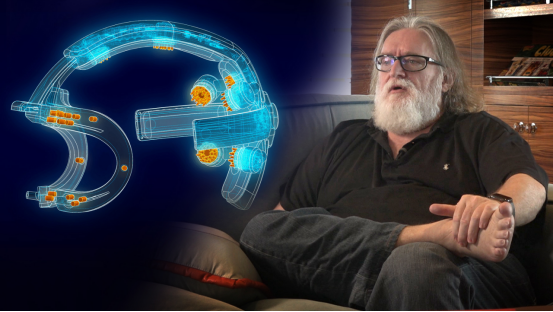
According to official accounts, the chip was designed to document brain activity (like Neuralink’s “read-the-heart” function under the Mask flag, enabling patients to interact with computers) and stimulate the brain (for disease treatment) and was designed to be miniaturized, low-efficiency and non-intrusive, but the company had yet to construct a complete implantation system and surgical programme.
According to the Brad Lynch technical blog, the parameters for the initial chip are: a normal record total power consumption of 1.1 mW; physical size 2 x 4 mm (0.3 mm distance BGA envelope); support for neural signal recording (spill and local field level) and double-stage pulse irritation; 32 electropolar contact points and 16 synchronized recording channels (sampling rate 18.75 kHz); one current source to support arbitrary electrodes irritation; internal resistance monitoring and irritation electric voltage transient measurement modules; low-bandwire-free transmission through tablet pre-processing and peak detection; and manufacture using a desktop power 55nm process.
By contrast, Neuralink’s N1 chip spreads 1024 electrodes over its 64 implants, depleting about 6 milliwatts in 2019 and requiring periodic wireless charge-free batteries, with a full implant size of about 23 mm wide x 8 mm thick. Elon Mask ‘ s company is said to have completed three cases of human implantation, although it was able to function and to be interviewed in the first case, where the patient was partially delinear.
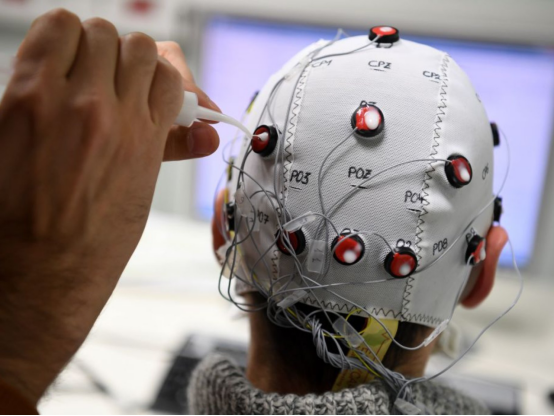
Starfish Neural Engineer Nate Cermak wrote: “We expect the first chip to be delivered by the end of 2025, and we are looking for partners to explore the new applications that the chip opens. “Starfish emphasizes that its goal is to create a much smaller, less intrusive implant than the competition, capable of “synchronizing access to multiple brain regions” rather than a single area, and without the need for batteries, which require only 1.1 milliwatts of power under normal records, which can be achieved through wireless power supply.
In addition to the BCI chip, Starfish will explore more possibilities in innovative areas such as health. Cermak states: “There is growing evidence that nervous system diseases such as Parkinson are associated with neuro-reversive disorders, i.e. inter-brain interaction. The Starfish network shows that it is developing “precision high-temperature treatment equipment” to destroy tumours by targeting heat; there is also a robot-directed cranium magnetic irritation system for the treatment of bipolar emotional disorders and depression.
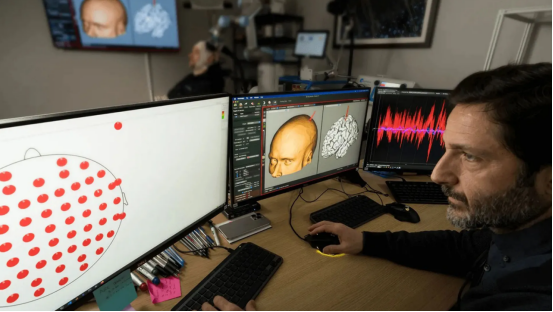
Gabe Newville has been working for many years to explore the idea of deep human brain-to-computer connections as an industry leader of the world ‘ s largest PC game platform, Steam, who created a classic series of Half Lives, Dota2 ” Anti-Terrorism Elite ” .
More than 10 years ago, a psychologist within V Society conducted a study on the physical response to the player ‘ s game and considered the integration of earplugs into its first VR headline, and in 2019, Gabe Newville openly discussed his potential for the application of the brain interface to the game.
In 2021, Gabe Newville explored in depth the potential of neuro-interfacing technologies and their application in the game industry. He envisaged that future games could be based on the level of participation monitored by the player’s neuro-modulation technology and that the system would be able to adjust the parameters of level complexity, enemy AI strength, etc., to the player’s real-time brain wave data (e.g., focus, emotional fluctuations) to ensure that players remained “heart flow” at all times.

Newville predicts that future nerve interfaces can project physical sensory experiences (e.g. touch, temperature, gravity) in the virtual environment into a real sense. At the same time, particular emphasis was placed on the need for such technologies to be equipped with military-grade encryption protocols and biometric authentication to prevent the seizure of nerve signals or sensory overloading resulting from hacking. He called on the industry to establish “neuro-net safety standards” to avoid risks to human security arising from the misuse of technology.